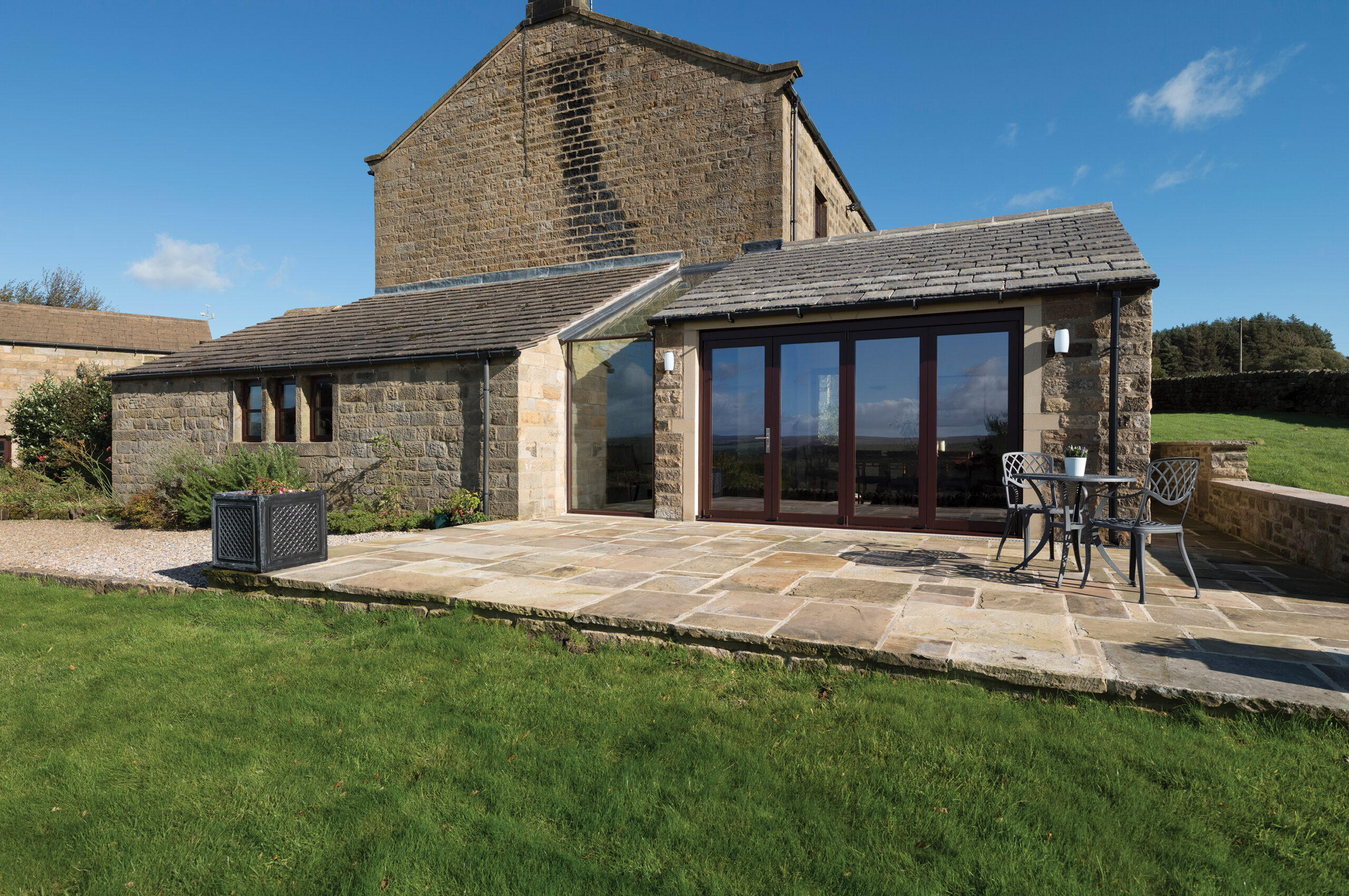
Bifold doors (sometimes written as “bi-fold) are designed to glide effortlessly, opening up your home to light, air, and uninterrupted views. When they’re working as they should, they feel seamless. But over time, even the highest-quality bifold doors may need slight adjustment, for many different reasons.
In this guide, we’ll explain the reasons why bifold doors sometimes need adjusting, how to tell when it’s time, and how to make those adjustments safely and effectively.
Why might bifold doors need adjusting?
Bifold doors are precision-engineered systems made up of panels, hinges, pivots, rollers, and tracks. Because they are large, weight-bearing installations, small shifts can affect alignment over time, and these shifts occur for several common reasons:
Seasonal movement
With timber bifold doors in particular, natural expansion and contraction can occur as humidity and temperature change throughout the year. This is completely normal. Quality timber systems are designed to accommodate this movement, but minor fine-tuning may occasionally be needed.
General wear and daily use
Bifolding doors are often high-traffic features, especially in kitchen extensions and garden-facing living spaces. Repeated opening and closing can gradually affect hinge tension or panel alignment.
Building settlement
All properties experience subtle structural settling over time. Even minor shifts in the building can influence how doors sit within their frame.
Loose hardware
Hinges, pivots, and locking mechanisms may loosen slightly with use. A simple tightening can often resolve alignment issues.
Installation quality
Proper installation is crucial. If doors weren’t perfectly level or square at the outset, adjustment may be required sooner than expected.
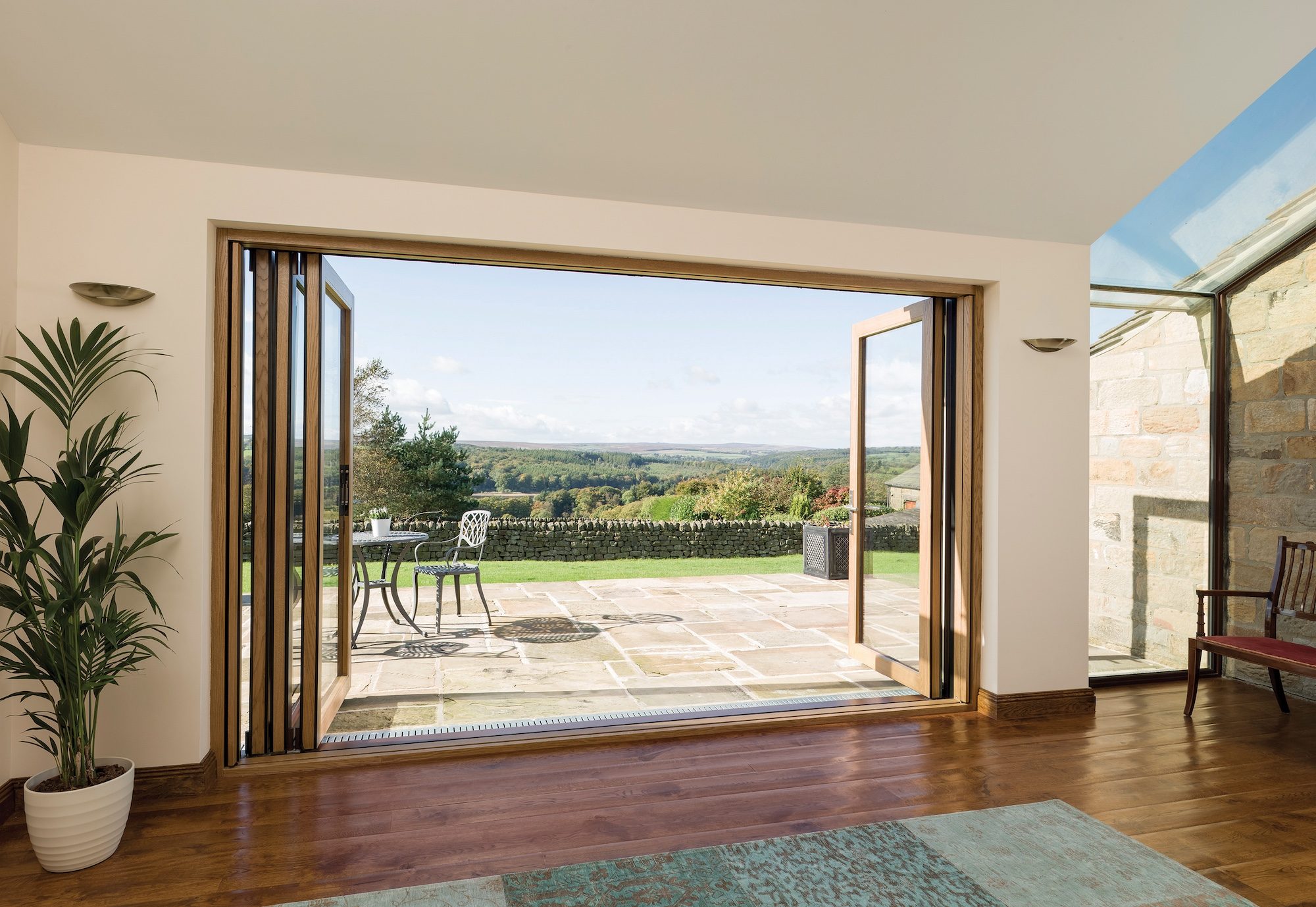
When should you adjust your bifold doors?
Not every minor change requires immediate action, but there are clear signs that adjustment may be needed. Look out for:
- Doors scraping along the floor
- Visible gaps between panels when closed
- Difficulty engaging the lock
- Panels that don’t sit flush in the frame
- Draughts around the edges
- Rattling during windy conditions
- Stiff or uneven sliding
If you notice one or more of these signs, a careful adjustment can usually restore smooth performance.
Tools you’ll need before you start
Before making any adjustments, gather:
- An Allen key set (most bifold systems use these for pivot adjustments)
- A screwdriver
- A spirit level
- A stable step ladder
- A soft cloth for cleaning tracks
- Silicone-based lubricant (avoid oil-based products)
It’s important to work methodically and never force a panel into place. Most bifold door types are robust but should always be handled with care. Unless you are very confident in your abilities, it may be best to seek professional help. We take no responsibility for the outcome of your maintenance work.
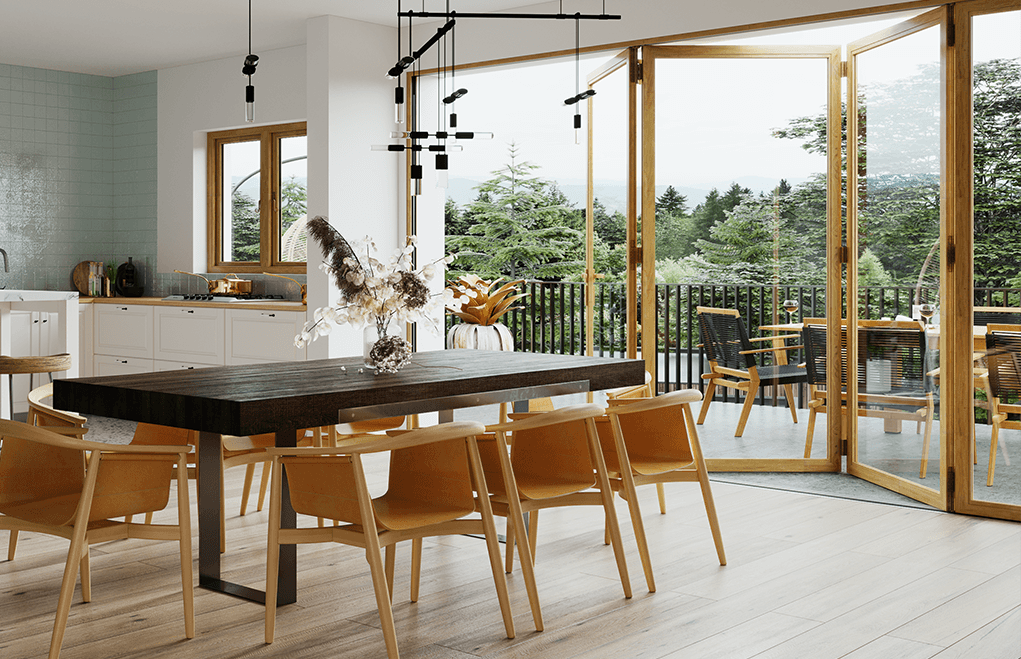
How to adjust a set of bi-folding doors
There are several different ways to adjust a set of bifold doors and have it work as it should again:
Check and clean the track
Before adjusting anything, inspect the top and bottom tracks. Dirt, debris, or small obstructions can prevent smooth movement.
- Wipe the tracks clean with a soft cloth.
- Remove any visible debris.
- Apply a light silicone-based lubricant to rollers if needed.
Test the door again. In some cases, this alone resolves the issue.
Adjust the height
If your door is scraping the floor or appears slightly dropped, the bottom pivot likely needs adjusting.
- Locate the adjustment screw (this may be on the top or bottom pivot or hinge)
- Insert the correct Allen key.
- Turn clockwise to raise the panel.
- Turn anti-clockwise to lower it.
Make small adjustments at a time and test the door after each turn. Even a slight movement can make a significant difference.
Side-to-side alignment adjusting
If panels aren’t sitting flush when closed, lateral alignment may need correcting.
- Open the doors as far as possible to access the top and bottom pivots
- Locate the pivot bracket adjustment point
- Use a screwdriver to gently adjust and shift the panel left or right.
Again, work gradually. Check that the panels align evenly within the frame.
Tighten the hinges and hardware
Check all visible hinges and fixings along the panels.
- Tighten any loose screws carefully.
- Avoid over-tightening, as this can strain the hardware.
Loose components are one of the simplest causes of misalignment, so you may want to do this if the problem isn’t that the door needs a simple cleaning.
Check lock and handle alignment
If locking feels stiff or misaligned:
- Inspect the strike plates and locking keeps.
- Adjust slightly if necessary, so the locking mechanism engages smoothly.
The door should close and lock without force.
The toe and heel method
If a bifold door continues to drop despite hinge or pivot adjustments, the issue may not lie in the hardware at all. Instead, it may relate to how the glazing unit is supporting the sash.
Toe and heeling is a glazing technique used to transfer the weight of the glass diagonally across the frame. By carefully positioning packers between the glass and the sash, the structural weight of the glazed unit helps prevent the door panel from sagging over time.
It is most commonly required when:
- A panel has dropped significantly
- The lock side no longer aligns correctly
- Adjustments at hinge level no longer resolve the issue
- The door was not correctly glazed at installation
Because modern bifold doors rely on the glass unit for structural stability, correct toe and heeling is essential for long-term performance.
Toe and heel adjustments for bifold doors
Toe and heeling requires specialist care. The process involves removing the glazing beads and handling heavy sealed units.
What you will typically need
- Glazing shovel or stiff putty knife
- Nylon or plastic packers and shims (various thicknesses)
- Setting blocks
- Suction lifters (recommended for large panes)
- A glazing mallet
- Protective gloves
- Assistance – you should never attempt this alone with large glass units
Because bifold panels are heavy and sealed units can be fragile at the edges, safe handling is essential.
The toe and heel method, step by step
Step 1: Assess the door
Before you begin adjusting, open and close the doors several times to identify any sticking points or areas where the door is noticeably uneven. Also, check for visible gaps between the door and the frame, and if the door touches the frame at the top or bottom. A spirit level will help you do this correctly.
Step 2: Remove the glazing beads and gasket
Carefully remove the internal glazing beads and gasket using a glazing tool or stiff putty knife. Start with the shortest bead first and work methodically around the frame. Keep beads labelled so they can be reinstalled in the same position. This step allows you access to the glass.
Take care not to damage paint finishes or the timber frame if you have a wooden bifold door.
Step 3: Support the glass
Before adjusting the packers, ensure the glass is properly supported. Large bifold panels can be extremely heavy. Using suction lifters and an assistant is strongly advised.
Never allow the sealed unit to sit unsupported within the frame.
Step 4: Determine the pack points and insert the packers
The packers or shims need to be placed strategically to counter the weight of the glass.
- Place a packer in the bottom corner on the hinge side (the “heel”).
- Place another packer in the opposite top corner on the locking side (the “toe”).
This diagonal positioning shifts the weight of the glass towards the upper locking corner, counteracting sagging.
Additional packers may be required along the bottom edge to maintain level support, but care must be taken not to over-pack or create pressure points.
Step 5: Check alignment before re-seating
Before replacing the glazing beads:
- Close the door gently.
- Check alignment at the frame.
- Test the locking mechanism.
- Ensure the panel now sits square and flush.
Minor packer adjustments may be required to achieve perfect positioning.
Step 6: Reinstall the gasket and glazing beads
Once alignment is confirmed:
- Refit the gasket, beginning in the corner and pressing firmly into the groove
- Carefully tap the glazing beads back into place using a glazing mallet.
- Ensure each bead sits firmly and evenly.
Test the door again to confirm smooth operation.
An important note
While toe and heeling is a well-established glazing method, it is not a casual adjustment. Incorrect packer placement can:
- Stress the sealed unit
- Compromise thermal performance
- Affect security
- Void manufacturer warranties
For high-value bifold systems, particularly timber systems in listed or heritage properties, professional attention is always recommended.
When correctly glazed from the outset, well-manufactured bifold doors should maintain alignment for many years with only minimal adjustment required.
Preventing future alignment issues
Routine care can significantly extend the life and performance of your bifold doors:
- Clean tracks regularly
- Avoid slamming panels
- Inspect hardware seasonally
- Maintain paint or finish when attempting to protect timber
- Schedule periodic professional inspections for high-use installations
Our timber bifold doors are designed to last decades when properly maintained.
The importance of quality craftsmanship
Bifold doors are an investment feature. When using FSC-certified timber, correctly kiln-dried and precision-manufactured to meet the standards of Secured By Design, they offer long-term durability alongside exceptional aesthetic appeal.
At Nine Zero, our external doors are all designed to combine heritage styling with modern performance, delivering thermal efficiency, security, and structural stability without compromising character.
Considering new wooden bifold doors?
If your current doors are beyond adjustment, or you’re planning a renovation, restoration, or new build, our team would be delighted to help. Nine Zero offers timber doors that are tailored to your property or project, whether you’re a homeowner, architect, or developer.
To discuss your needs or arrange a consultation, get in touch with our team today.